DIGITAL ASSET MANAGEMENT IN VIETNAM (2025-2026): FROM RECOGNITION TO RIGOROUS ENFORCEMENT
Ngày đăng: 25/12/2025
lúc 14:27:54
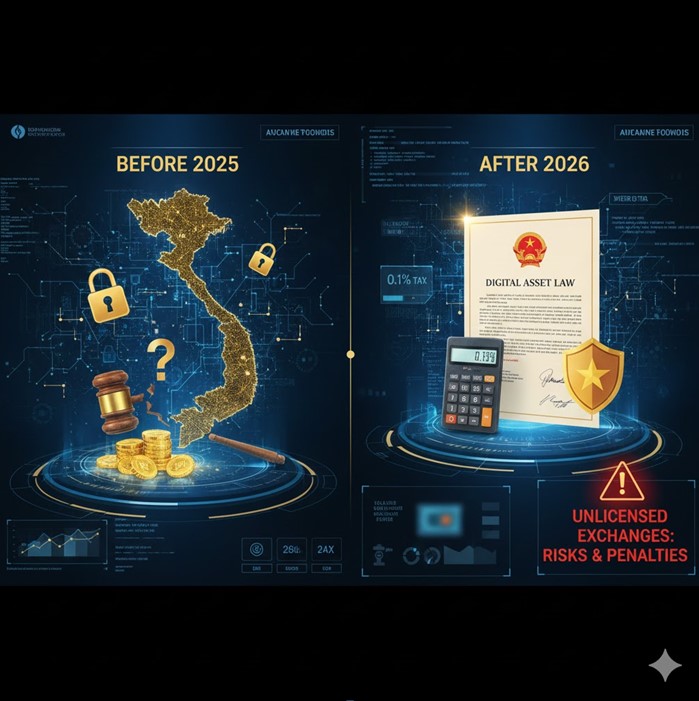
The Vietnamese legal system is undergoing a historic reform regarding the digital asset market. Moving away from a state of “non-recognition,” the 2025-2026 period marks the establishment of a comprehensive legal framework designed to both facilitate digital economic growth and implement strict sanctions against illegal activities.
- Establishing Legal Status: The “Birth” of Digital Assets The most significant change stems from the Digital Technology Industry Law 2025 (effective January 1, 2026). Accordingly:
- Definition of Assets: Crypto assets (Bitcoin, ETH, USDT, etc.) and virtual assets (NFTs, digital items) are officially recognized as “Assets” under the Civil Code. They are verified by Blockchain technology and subject to legal ownership rights.
- Sandbox Mechanism: The Government has established a legal “testing ground” (Resolution 05/2025/NQ-CP) for Virtual Asset Service Providers (VASPs) to operate under strict supervision.
- The 0.1% Tax Policy: Obligations Hand-in-Hand with Rights Starting July 1, 2026, all digital asset transactions in Vietnam will be subject to a 0.1% tax on transaction revenue.
- Why pay tax? Tax payment is not just a budget contribution; it serves as an “identity card” for your assets. Once taxes are declared, investors gain a legal basis for protection in civil disputes, inheritance, or fraud cases.
- Collection Mechanism: Licensed exchanges will automatically deduct tax at the source, simplifying declaration procedures for investors.
- Strict Sanctions: Penalties for “Underground” Transactions Parallel to the opening of legal exchanges, the State will tighten control over transactions on unlicensed foreign platforms (e.g., Binance, Bybit, KuCoin, etc.).
- Why are unlicensed foreign transactions penalized? These activities often violate foreign exchange management regulations and bypass national Anti-Money Laundering (AML) systems.
- Expected Penalties (from 2026): * Administrative Fines: Individuals may face fines from 20 to 50 million VND.
- Tax Violations: Unreported income will face back-taxes plus late payment interest (0.03%/day) and fines of 1-3 times the evaded tax amount.
- Account Freezing: Banks have the right to freeze cash flows from unlicensed exchanges.
- Criminal Liability: For large-scale or repeat offenses, investors may face “Tax Evasion” charges under Article 200 of the Penal Code.
Conclusion: The Government’s message is clear: Vietnam supports technology but does not compromise with uncontrolled financial activities. Investors are advised to switch to platforms licensed in Vietnam to ensure asset safety and avoid legal risks.